

Bell Review update
The report of the Independent Review into antisemitism is schools and colleges and the government response were published 21 October 2026. The government confirmed in Parliament that it accepts all 27 recommendations.
We are calling on school and college leaders, trusts and governing bodies to begin planning for implementation. The review provides a clear framework for ensuring that Jewish pupils and students feel safe, supported and able to thrive.
Key areas for action include adopting the IHRA working definition of antisemitism, strengthening safeguarding and behaviour approaches, improving staff training, enhancing curriculum opportunities to learn about Jewish life and contemporary antisemitism, and ensuring robust responses to incidents of antisemitism.
The Secretary of State will write to all schools and colleges before the end of the year with further detail on implementation and practical steps settings can take. This work forms part of the department’s wider commitment to tackling antisemitism in education, backed by £7 million of government funding.
Free antisemitism programmes funded by the Department for Education
The Department for Education’s £1 million Tackling Antisemitism in Education Innovation Fund is supporting four projects testing new ways to help learners recognise and challenge antisemitism, misinformation and prejudice. One of these projects, Someone Else’s Eyes, is delivering the Bridges & Studios programme for learners aged 16+, using simulated social media, respectful disagreement and multifaith collaboration to build media literacy, empathy and confidence in navigating difference. Education settings based in London interested in the programme can contact Someone Else’s Eyes for further information or to arrange a free session.
Alongside the Innovation Fund, Palace Yard is delivering a Tackling Antisemitism in Education scholarship programme for staff across schools, colleges and universities. The free online programme is designed to help education professionals recognise, understand and respond appropriately to antisemitism, creating a network of experts supported by further learning and an active network for sharing practice and resources.
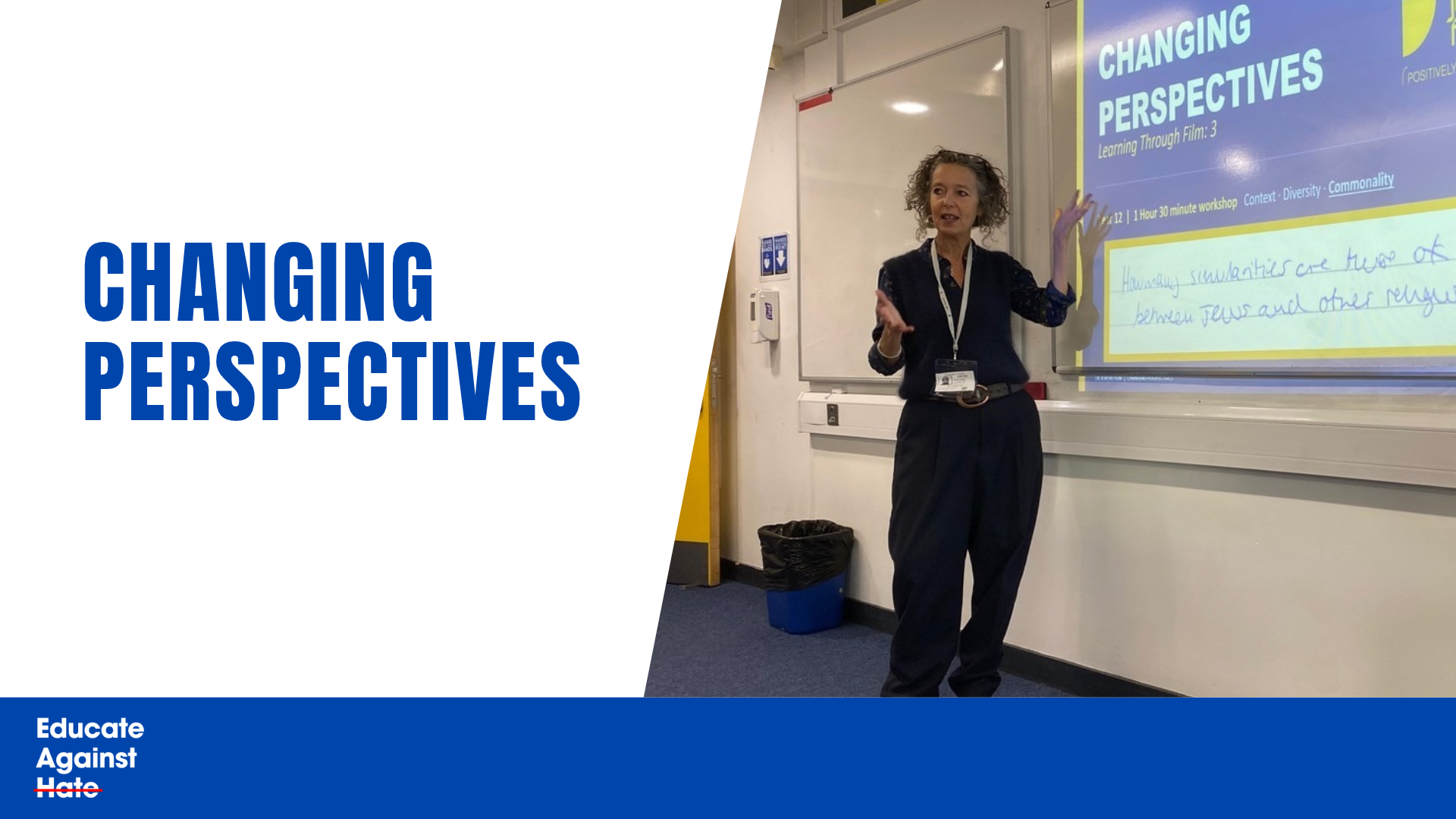
UK Jewish Film’s Changing Perspectives programme is based on selected short films which challenge stereotypes and build media literacy. The films represent Jewish people from a range of geographical locations in the UK, showing the diversity of Jewish life in Britain. The programme is delivered via in-person workshops in secondary schools, FE settings, teacher training institutions and universities, alongside CPD so that teachers feel confident leading these conversations themselves.
A good short film does something a textbook can’t. Students meet a character before they meet a category. Every workshop begins with asking students what they think they know about British Jewish people, and where their knowledge comes from. The answers are often revealing. Students who say they have never come across antisemitism will, a few minutes later, describe anti-Jewish tropes they’ve heard repeated without recognising them as such. As one Year 12 student put it: “The movies and film clips opened my eyes to how subtle antisemitism can be.”
Changing Perspectives enables young people to start separating legitimate political opinion from deep-seated prejudice. This matters well beyond the Jewish community and are fundamental to our shared democratic values. These are civic skills, and they can be taught.
In May 2027 UK Jewish Film will launch the new, free-to-access Changing Perspectives online resource for schools based on three bespoke films, focussing on a different strand of Jewish identity. paired with learning activities and classroom-ready materials.
If you’d like to bring a workshop or CPD session to your school, help shape the new resource before it launches, or hear as soon as it goes live, contact UK Jewish School’s Head of Education Rachel Burns.
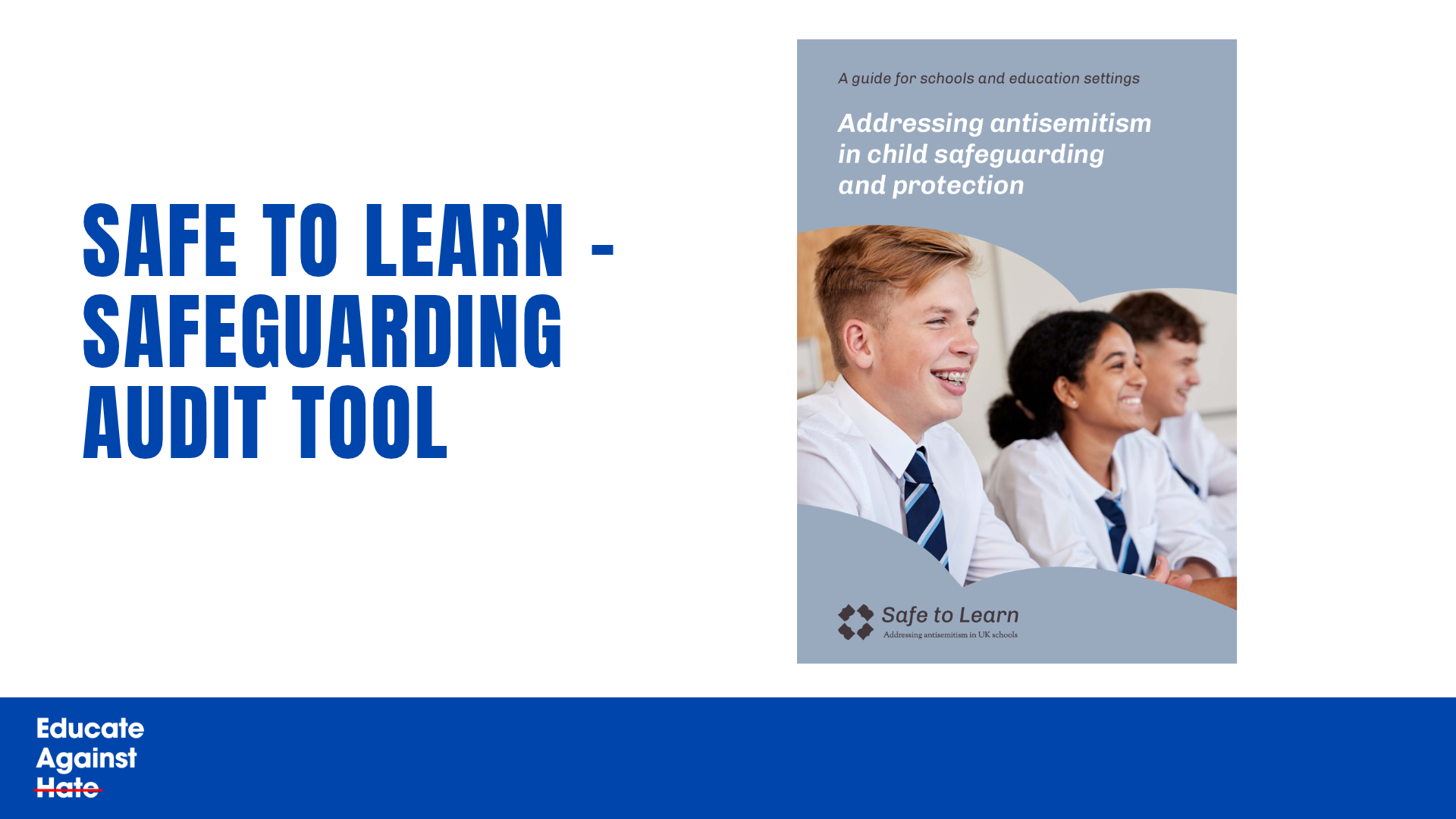
Robust safeguarding measures in schools are vital in the fight against antisemitism. By embedding clear policies and proactive strategies including preventative education, schools can create safe, inclusive environments where prejudice is challenged and respect is promoted. Effective safeguarding begins with staff training, ensuring teachers and leaders can identify antisemitic language, behaviour or online activity and respond swiftly and appropriately.
Integrating antisemitism awareness into safeguarding frameworks reinforces a school’s duty to protect students from harm, including harm caused by hate speech or discrimination. This approach goes beyond reacting to incidents – it focuses on prevention.
Wondering where to start?
Use the recently updated audit tool from Safe to Learn to help prepare for the implementation of the Bell Review recommendations.

Education charity Learn About Britain has just launched a set of free Key Stage 3 resources marking the 90th anniversary of the Battle of Cable Street, when Jews and non-Jews came together to drive fascist marchers out of the East End of London.
The resources support both history and citizenship/PSHE teaching and help schools to fulfil their obligations in relation to Fundamental British Values.
The materials include lesson and assembly plans as well as supporting Powerpoints and accompanying short films. Learn About Britain are also running a competition on how students can embody the spirit of Cable Street in their communities.
The resources explore important themes in relation to standing up to hatred, the changing face of antisemitism and fascism in the UK and are freely available to schools across the country.
Find more information about the competition
Further resources
Community Security Trust
A selection of resources for KS3/4 that focus on helping learners to understand antisemitism and the historical context surrounding it, conspiracy theories linked to antisemitism, and anti-Zionism. Each resource contains short videos that can be used to discuss antisemitism with learners.
Letting Go of Hate
Four-part curriculum for KS4 which looks at the origins of antisemitism, its persistence, and its impact. The programme consists of four sessions that guide students through key questions including what is antisemitism what can students do to combat antisemitism and hate more broadly.