

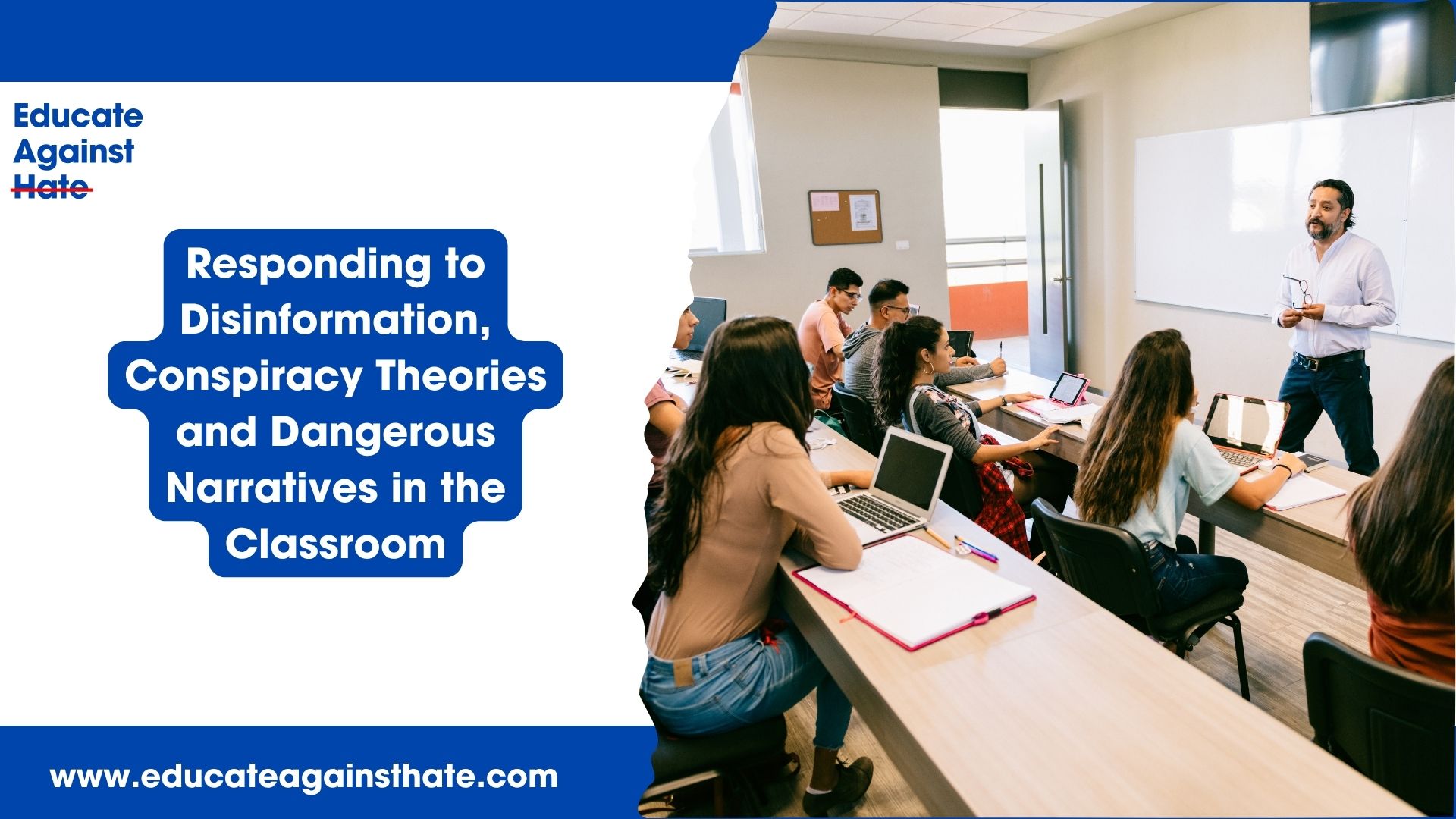
Free CPD session for 2026/27 – delivered by Jeremy Hayward UCL
The internet has enabled vast amounts of information and ideas to be created, shared and discussed online. One effect has been the widespread dissemination of disinformation, conspiracy theories and dangerous narratives which sometimes spill over into the classroom.
Disinformation can significantly shape how young people understand the world, often distorting their perceptions of reality. Many young people rely heavily on social media and digital platforms for information; they are especially vulnerable to misleading or false content designed to appear credible. This can influence their opinions on important issues such as health, politics, and social relationships. For example, exposure to false health information can lead to harmful behaviours, while political disinformation may shape biased or misinformed beliefs before critical thinking skills are fully developed.
Beyond influencing beliefs, disinformation can also affect young people’s emotional well-being and trust in others. Constant exposure to conflicting or false narratives can create confusion, anxiety, and a sense of uncertainty about what is true. It may also erode trust in reliable institutions such as education systems, governments, and the media. Over time, this can make young people more cynical or disengaged from important civic and social processes, highlighting the importance of media literacy and critical thinking skills to help them navigate information responsibly.
Jeremy Hayward, Associate Professor at the Institute for Education at UCL is running a free CPD offer for schools that draws on ideas from education, philosophy and political psychology to consider different approaches that can help teachers respond to conspiracy, disinformation and dangerous ideas in the classroom. The CPD session has been piloted at over 20 schools and received very positive feedback from teachers and senior leaders.
The session will:
- Set out the context and discuss key terms – e.g. conspiracy theories, disinformation
- Summarise what research tells us about conspiracy belief – including in young people
- Summarise research on responding to conspiracy theories/disinformation
- Analyse the idea of teacher direction i.e. when should a teacher direct student to a definitive answer and when should a teacher treat a question as open?
- Set out different approaches a teacher might take and apply these to a range of case studies
This is a 90-minute interactive and engaging session (timings can be adjusted). The session is designed to be delivered face to face.
To book a free CPD session please email Jeremy Hayward with your preferred date(s) at conspiracycpd@ucl.ac.uk (please note that Thursdays are not possible).
This work is supported by Pears Foundation as part of the Commission into Countering Online Conspiracies in Schools.
Jeremy Hayward is an Associate Professor at the Institute of Education, UCL. A former teacher, he has been involved in teacher education for the last 23 years – specialising in Citizenship Education and the teaching of controversial issues. He has written numerous textbooks, resources and guidance for schools in the areas of philosophy (Hodder series of A level textbooks) and citizenship – including recent guidance for schools on how to respond to conspiracy theories raised in the classroom.